
Over the years of my work, this question has been asked countless times: Can a MIG welding machine be used for TIG welding?
My answer has always been very clear: No. The principle is actually very simple. MIG and TIG were two different things from the very beginning, with completely different design concepts. MIG emphasizes efficiency and accelerates the production pace by means of continuous wire feeding and wider arcs. TIG, on the other hand, focuses on precision and controls the subtle changes of the molten pool through tungsten electrodes and manual wire feeding. It is precisely this fundamental difference between the two that makes MIG equipment unable to achieve the same arc stability and heat control as TIG even when using different gases, polarities or fixtures.

So every time someone raises this question, I often tell them: This is not just a matter of whether it can be changed or not. It’s more important to think outside this line of thinking: Should we continue to use single-function equipment or should we consider the increasingly mature multi-functional welding machines and strike a balance between cost and flexibility? This is also a realistic choice that many workshops cannot avoid when investing in equipment.
The basic differences between MIG and TIG
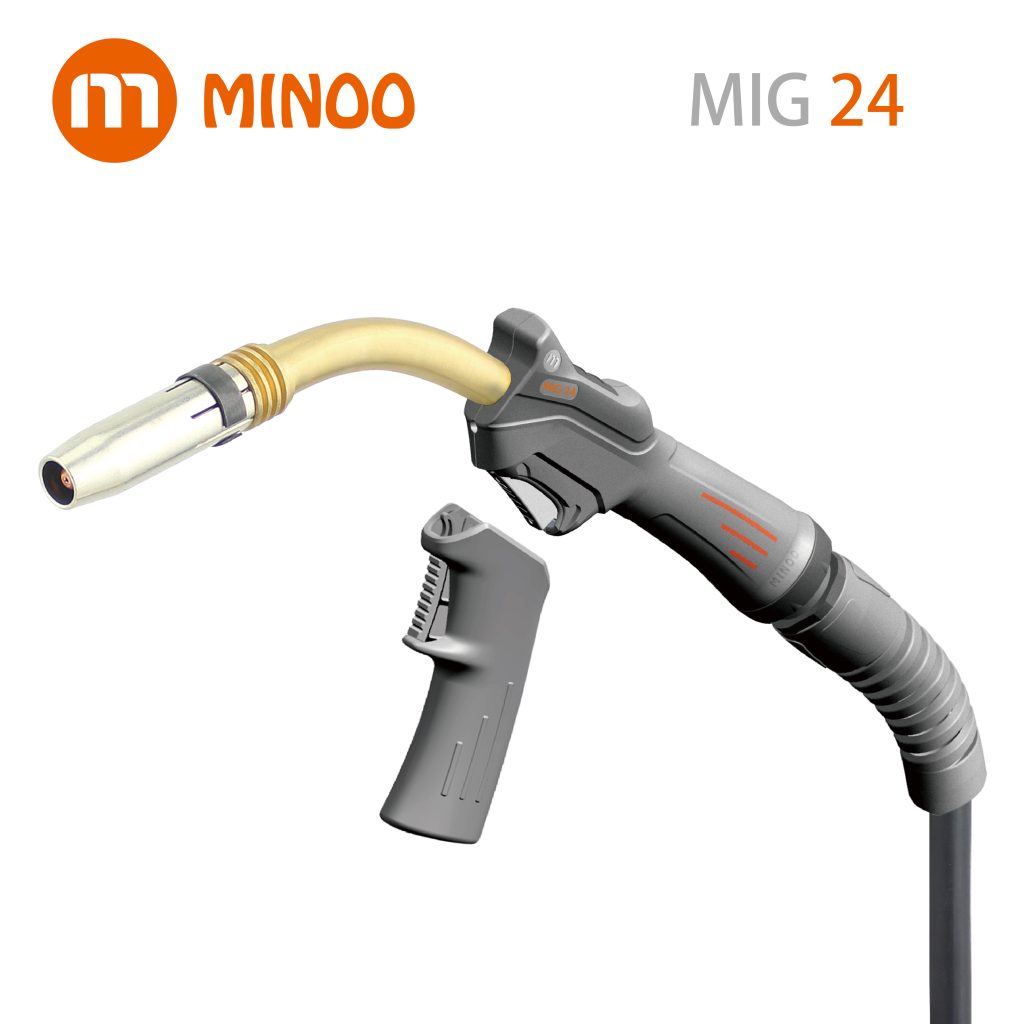
The advantages of MIG welding, in fact, mainly lie in its speed and efficiency. It can achieve a very high deposition rate through continuous wire feeding and protective gas, and the duration of a single welding is also long, so it is particularly suitable for production environments. Its arc is relatively wide, stable and the heat distribution is also relatively uniform. In this way, the risk of overheating is naturally reduced.
As for TIG welding, I think it emphasizes control and precision more. It uses tungsten electrodes and the filling material has to be delivered manually. In fact, the technical proficiency required of the operators is not low. Although its speed may not be as fast as MIG, TIG has fundamental and irreplaceable advantages in thin plates, aluminum alloys or those situations where high requirements are placed on the appearance and precision of welds.

Observations from personal experience
During my over two decades of work, I have often encountered clients who wish to use their existing MIG equipment to meet the demands of TIG processes. From a technical perspective, such attempts have almost never led to ideal results. The arc characteristics and heat input methods of the MIG model determine that it cannot completely replace the TIG. Especially in situations where aesthetically pleasing weld seams and precise control of the molten pool are required, MIG models cannot achieve the desired effect even after modification. On the contrary, those workshops that are willing to invest in appropriate equipment tend to recover their costs more quickly in terms of quality and efficiency.
The emergence of multi-functional welding machines
With the continuous development of technology, multi-functional welding machines have gradually become a compromise and practical choice. The MTS equipment currently available on the market, namely the MIG, TIG and manual welding three-in-one model, integrates several welding processes into one machine. The benefits of doing so are obvious: the workshop no longer needs to configure separate equipment for each process, which saves both space and costs.
This type of equipment usually comes with functions such as automatic polarity switching, gas management and digital programs, and can switch between different welding methods very quickly. For environments with limited space or where welding processes need to be frequently switched, the advantages of multi-functional welding machines in terms of efficiency and flexibility make them particularly convenient to use.
Cost and application value
From an economic perspective, the price of a high-quality multi-functional welding machine is often lower than the total of multiple specialized devices, which is particularly attractive to small and medium-sized workshops and individual welders. It is not only capable of handling MIG in mass production, but also capable of dealing with fine TIG welding and manual welding of structural components. For welders who want to enhance their skills across different processes, this type of equipment also offers a broader learning space.
Over the years, I have found that many small and medium-sized factories have indeed improved their adaptability by relying on multi-functional welding machines. Especially when orders are diverse and the quantity of each batch of orders is not large, the effect is particularly obvious. This type of equipment usually enables them to handle a wide variety of welding requirements without a large investment.
It should be noted that although the performance of multi-functional devices is comprehensive, they still fall short of dedicated models under extreme conditions. For instance, in thick plate TIG welding or high-load MIG production, dedicated equipment may be more stable. Which option to choose should be determined in combination with the specific process requirements and project characteristics.
Development trends and sustainability
The technology of modern multi-functional welding machines is still constantly advancing. The application of preset programs, cooling systems and automatic recognition functions has made their user experience increasingly close to that of dedicated equipment. At the same time, from the perspective of resource utilization, reducing the production and occupation of multiple devices also aligns with the industry’s focus on sustainable development.
Conclusion
From practical experience, standard MIG welding machines cannot directly replace TIG. However, with the maturation of multi-functional equipment, more and more workshops have begun to adopt them to meet diverse welding requirements. The choice between dedicated equipment and multi-functional equipment depends on the project requirements and workload. If the highest level of single-process performance is pursued, dedicated models remain the top choice. For users who need to balance flexibility and cost, the multi-functional welding machine is undoubtedly a reliable solution.
My personal suggestion is: If your work has long been focused on a certain type of process, it is more reliable to invest in a high-quality dedicated device. However, if the daily tasks are diverse or the workshop space is limited, then a reliable multi-functional welding machine will bring greater overall value.
Other things you might want to know
Is MIG welding as strong as TIG?
What are the benefits of using the MTS multi-functional welding machine in the workshop?
This type of welding machine does indeed bring many tangible advantages.
First of all, you no longer need to purchase MIG, TIG and manual welding equipment separately, which saves both space and costs.
Secondly, operators can quickly switch between different welding processes, which is particularly suitable for production environments with a wide variety of products that require flexible adjustments, and the overall work efficiency is also higher.
Furthermore, it is also an excellent platform for skill enhancement - welders can become familiar with multiple processes on the same machine and accumulate more comprehensive experience.
Finally, modern MTS welders are usually equipped with digital displays, preset process programs, as well as functions such as automatic gas regulation and polarity switching. No matter what kind of welding task they are dealing with, they can output stable and professional results.